
3 June 2026: Two major reports released this year clearly highlight why Australia urgently needs mandatory producer responsibility for lithium batteries.
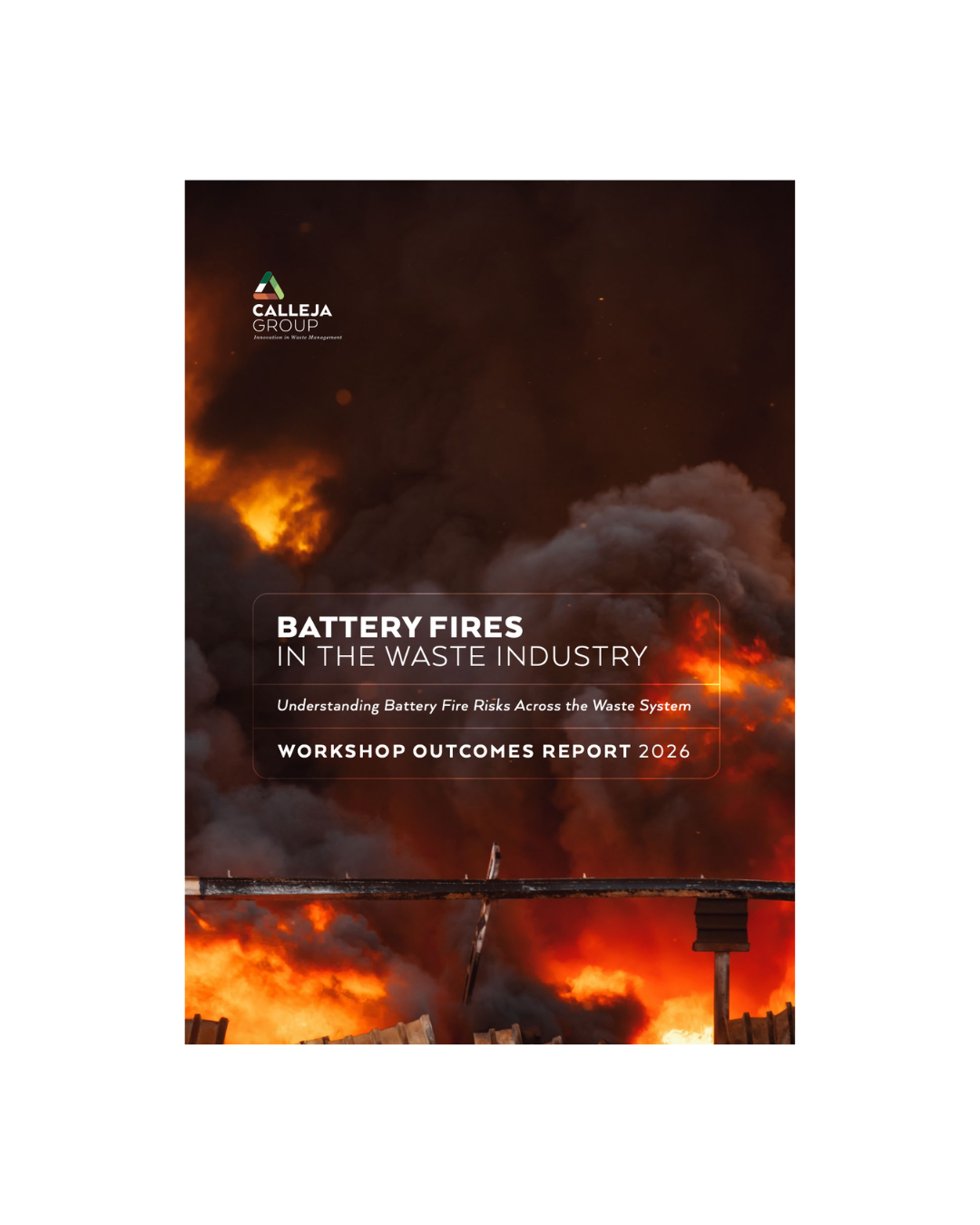
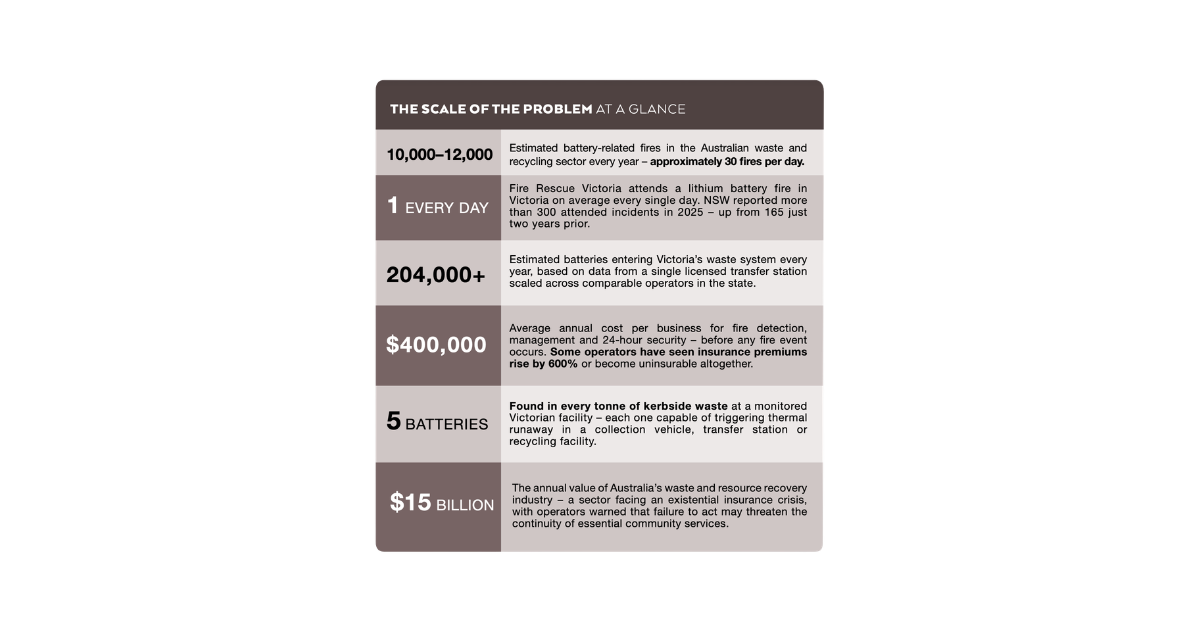
The Battery Fires in the Waste Industry report by Calleja Group highlights the growing safety risks of battery fires, estimating 30 fires per day occur across Australia's waste and recycling sector every year over 200,000 batteries entering Victoria’s waste system every year.
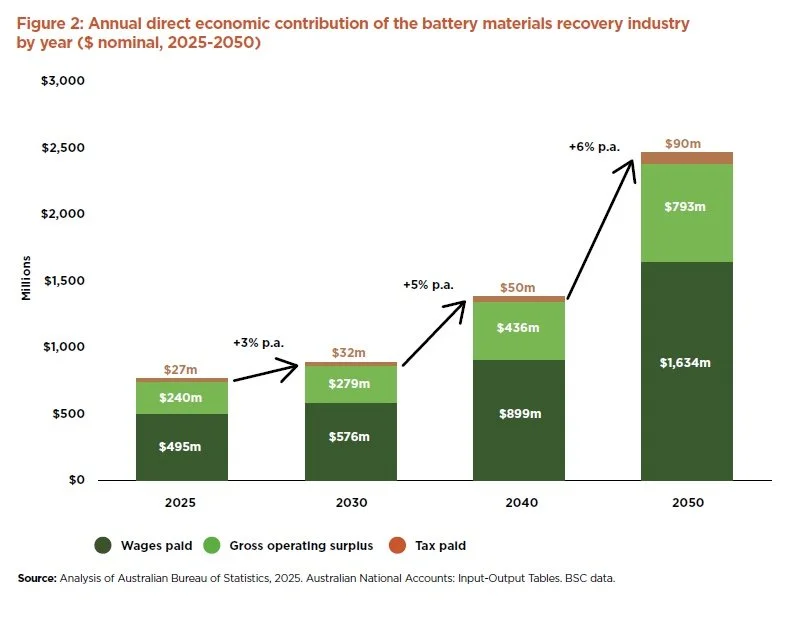
The Battery Materials Recovery Industry Profile, prepared by Positive Economics Advisory for the Association for the Battery Recycling Industry (ABRI), highlights the economic opportunity, showing Australia's battery materials recovery industry could grow from a $2.1 billion contributor to GDP today to almost $7 billion by 2050.
Together, these findings show how effective battery policy can deliver benefits across safety, resource recovery, economic development and supply chain resilience.
The scale of battery fires in the waste sector
The Battery Fires in the Waste Industry report brings together insights from waste operators, councils, regulators, emergency services and industry representatives to better understand where battery fire risks are occurring across the waste chain and where the biggest opportunities exist to reduce them.
Some of the findings are sobering:
⚠️ An estimated 10,000–12,000 battery-related fires occur across Australia's waste and recycling sector each year.*
⚠️ Fire Rescue Victoria attends a lithium battery fire on average every day.
⚠️ One monitored Victorian facility found approximately five batteries in every tonne of kerbside waste.
The report highlights the scale of the challenge facing the sector and reinforces the importance of keeping batteries out of the waste stream in the first place.
Many of the report's findings also align with ABRI's ongoing advocacy for a mandatory national battery producer responsibility scheme.
* Drawing on Australian Council of Recycling and Waste Contractors & Recyclers Association of NSW Industry Survey: Battery Fires in waste & recycling (June 2024)
Recovering critical materials for Australia's future
Only three out of every 20 handheld batteries (<5kg) are estimated to be recycled in Australia every year. This is a wasted opportunity to recover and reuse precious metals and materials, alleviate pressure on the environment and reduce the impact on landfills.
Responsible recycling will improve safety hazard standards and protect both waste industry and the community workers.
Also known as Extended Producer Responsibility (EPR), this approach mandates producers to manage the entire lifecycle of batteries and drive materials recovery. Currently, robust EPR schemes operate successfully across the European Union as well as parts of the United States, China, Japan and Korea.
The global trend is for increasing requirements on the responsible handling and disposal of end of life batteries. These countries recognise the national and supply chain security benefits of recovering battery materials.
Australia is at a critical juncture, and we need to take urgent action to make the most of opportunities from the clean energy transition. Today, we are literally throwing into landfill tonnes of metals and materials that are critical for our energy future like lithium, nickel, zinc, cobalt and copper.
Mandating producers to take responsibility for their products before and after consumers use them would help us recover more of these valuable resources and catch us up to leading global economies. It would also help protect the community from growing risks of battery fires and shield the environment from incorrectly disposing toxic materials in batteries.
Economic opportunities and industry development
Battery materials recovery is part of an ecosystem contributing $2.1 billion to Australia’s GDP, and has the potential to grow three-fold in size by 2050.
Australia’s battery recycling industry has already made significant strides in recovering the metals and critical minerals from batteries. It is a clean energy growth sector:
Investing well in excess of $260 million to develop the infrastructure critical to this value chain
Successfully exporting technology to Europe and the UK to support recovery of raw materials from lithium batteries
Processing zinc and lead from end of life zinc carbon and lead acid batteries (respectively) for use in new batteries and other products
Underpinning high recovery rates of lead acid batteries. The lead acid battery recycling market is a clear standout in recycling and materials recovery rates, with an estimated 96% of batteries going to recycling
Developing and manufacturing containers to underpin safe and sustainable battery collection and storage at end of life
Designing ESG technology, such as track and tracing capability, to support the transition to net zero and provide consumers with confidence that products are being recycled.
To continue this progress and encourage further industry investment, it is important to consider making ERP for batteries mandatory in the absence of robust collection and recycling networks.
Quick Action is Essential
With lithium battery usage rapidly growing, it’s time for quick action to improve safety, supply chain security and economic opportunities.
By moving swiftly from policy to implementation, Australian governments can establish battery regulations that support a circular economy and deliver benefits across the minerals sector, environment, battery industry, supply chain and community.
A nationally consistent mandatory producer responsibility framework would help ensure Australia captures the economic, environmental and safety opportunities of the battery transition.