
17 July 2026: As more lithium batteries move through Australia's collection, reuse and recycling systems, ensuring they are packaged and transported safely throughout the commercial recovery and recycling supply chain has never been more important.
From electronics, power tools to industrial equipment, energy storage systems and electric vehicles, the growing volume and variety of batteries entering the recovery stream is increasing the need for clear, practical guidance that helps businesses manage safety, compliance and operational risk.
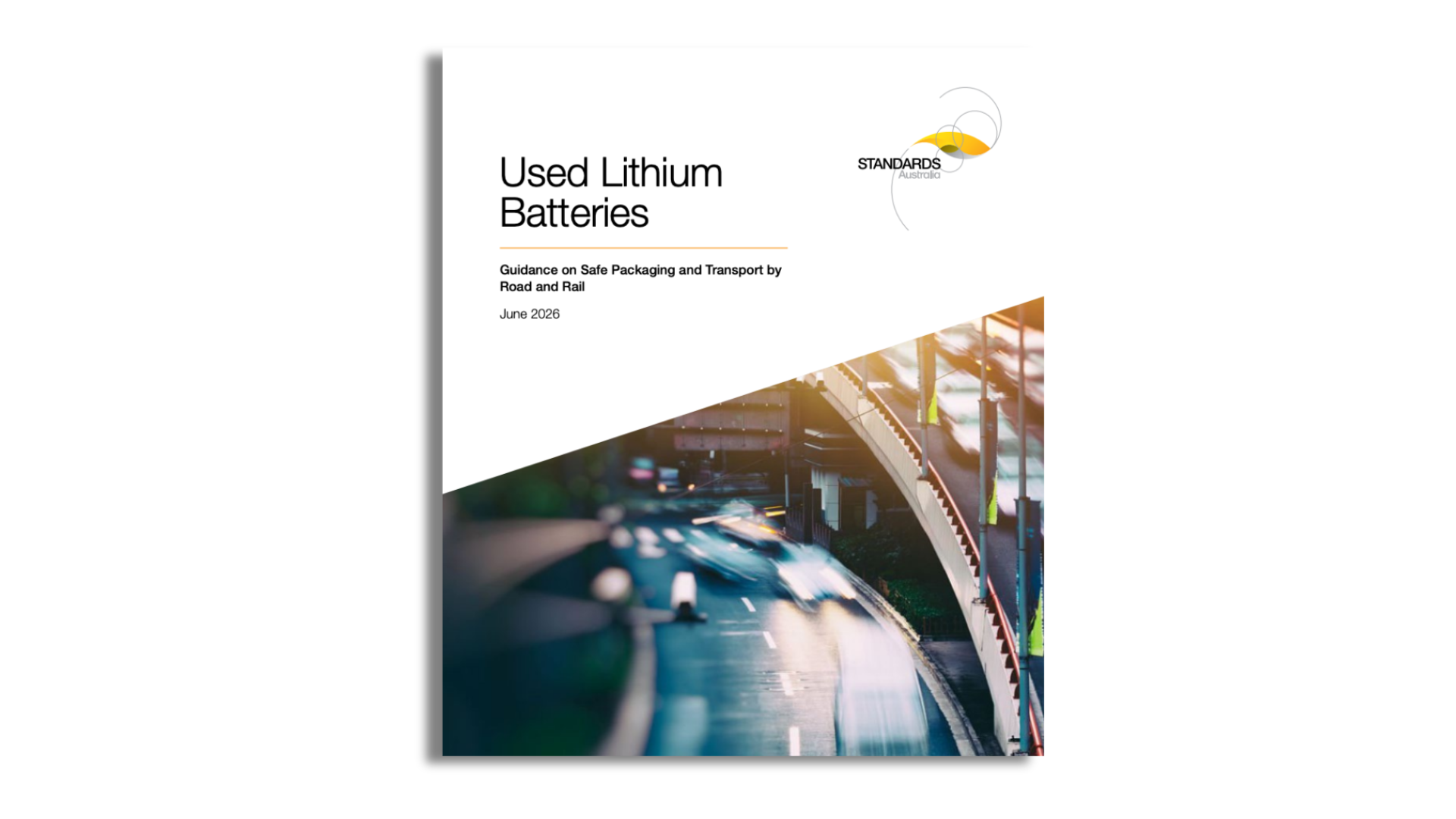
To support the industry, Standards Australia has released Used Lithium Batteries: Guidance on Safe Packaging and Transport by Road and Rail, developed in collaboration with the Association for the Battery Recycling Industry (ABRI), Powering Australia and a broad range of industry stakeholders.
The free, 24-page guide provides practical, nationally consistent guidance for commercial organisations involved in collecting, storing, packaging and transporting used lithium batteries for recycling, reuse and repair.
It is designed as a practical starting point to help businesses better understand and apply their obligations, alongside relevant legislation, regulations and professional advice.
Raising industry standards through practical guidance
One of ABRI's core priorities is supporting the continuous improvement of industry standards to enable the safe and sustainable reuse and recycling of batteries.
While used lithium batteries can present increased fire and safety risks if handled incorrectly, those risks can be mitigated through the implementation of systems, processes and training. Industry also has an important role to play in developing practical solutions that help businesses operate safely.
ABRI CEO Katharine Hole said the new guide is designed to support businesses.
"Used lithium-ion batteries can create serious fire and safety risks if they are not handled, packaged or transported in accordance with regulatory requirements," Ms Hole said.
"As battery volumes continue to grow, businesses need practical guidance they can apply with confidence.
“This guide brings together the information organisations need to support safer operations while helping them understand and meet their regulatory obligations."
The Guide brings practical information together in one place to support consistent decision-making across the battery recovery supply chain.
Helping businesses manage risk and compliance
Whether your organisation accepts used batteries from customers, prepares them for transport, coordinates logistics or manages compliance, handling used lithium batteries carries legal and operational responsibilities.
The guide brings together practical information to help organisations navigate complex packaging and transport requirements for used lithium batteries. However, it is a tool to complement but not substitute understanding and compliance activities to meet organisation's legal, regulatory and commercial obligations, which remain the responsibility of each business.
The guide has been developed to help organisations:
understand regulatory requirements for transporting used lithium batteries by road and rail
reduce fire, safety and compliance risks
improve consistency across collection, transport and recycling operations
support internal procedures and staff training
make day-to-day packaging and transport decisions with greater confidence.
By making complex regulatory requirements easier to understand and apply, the guide supports organisations in strengthening their approach to compliance and risk management while contributing to safer outcomes for workers, businesses and the environment.
Practical guidance for every stage of the supply chain
The guide has been developed for organisations across the battery recovery supply chain, providing practical information tailored to different operational roles.
Collection point operators can access guidance on battery triage, initial packaging and labelling. Logistics coordinators and dispatchers will find information covering dangerous goods documentation, waste tracking requirements and carrier engagement. Transport operators and drivers are supported with guidance on vehicle requirements, placarding, load restraint and emergency response procedures.
The guide also provides practical information for consolidation hub operators on workplace health and safety, while compliance managers can use it to better understand their obligations across the relevant regulatory frameworks.
By supporting greater consistency across each stage of the recovery process, the guide helps strengthen safety throughout Australia's battery value chain.
Developed by industry, for industry
The guide was developed with input from an expert advisory panel representing battery logistics, dangerous goods and environmental regulation, and operational practice.
It reflects the industry's commitment to working collaboratively to improve safety outcomes and provide practical solutions that businesses can implement today.
As Australia's battery recycling industry continues to grow and evolve, the guide provides an important foundation for safer, more consistent battery transport. It is expected to be reviewed and updated over time as regulations, technologies and industry practices continue to develop.
ABRI will continue working with industry and government to support practical guidance that strengthens industry standards and builds confidence across Australia's battery reuse and recycling sector.
Need further support?
The guide is designed to provide a practical starting point for organisations managing the packaging and transport of used lithium batteries. Depending on your operations, you may require additional technical, operational or regulatory advice beyond the scope of the guide.
If you need further assistance, consider speaking with an ABRI member specialising in battery collection, logistics, recycling or related services. ABRI's membership includes organisations with practical experience across Australia's battery value chain that can provide commercial products, services and technical expertise relevant to your business.
The guide should always be used alongside applicable legislation, regulatory requirements and professional advice where appropriate.
Download and using the guide
Used Lithium Batteries: Guidance on Safe Packaging and Transport by Road and Rail is available free from Standards Australia.
Whether your organisation collects, stores, prepares, transports or dispatches used lithium batteries for recycling, reuse or repair, the guide is a practical resource to help your team better understand packaging and transport requirements. It should be used alongside applicable legislation, regulatory requirements and professional advice relevant to your operations. It is a summary only and does not replace the detailed requirements set out in legislation and supporting instruments.
This first edition will need to be reviewed and updated as the regulatory environment evolves, as industry practice matures, and as new battery technologies and logistics models emerge.
Looking to recycle household batteries?
This guide is intended for commercial organisations. If you're looking to safely dispose of household batteries, visit your local council or an approved battery collection program such as B-cycle to find a nearby drop-off point.