5 November 2026: A used lead acid battery (ULAB) can pass through several hands before it reaches a recycler. Many different businesses may collect, pack, move or receive it along the way.
Each person conducting a business or undertaking (PCBU) in that chain has a duty to handle ULAB safely and stay compliant.
ABRI’s updated ULAB guidelines, set out in Safe and Sustainable Used Lead Acid Battery (ULAB) Logistics, show how to pack, store and transport ULAB safely at every step. The guideline was shaped by ABRI’s industry advisory group over five rounds of drafting and replaces the 2023 edition.
Here’s how to put it into practice to protect your people and keep your business compliant.
Who the ULAB guidelines apply to
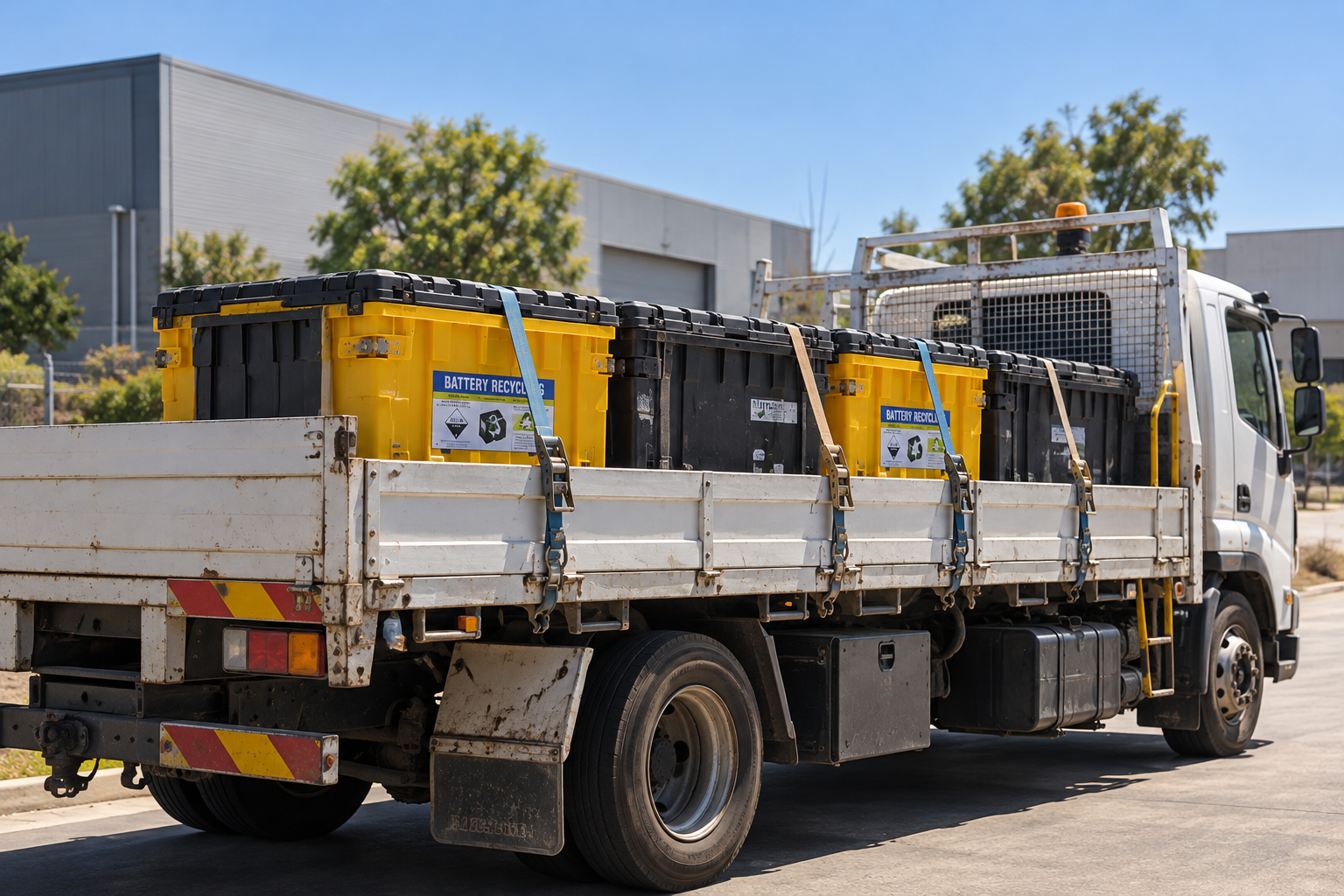
The guideline is written for collectors and aggregators. These are broad terms that describe what a business does with ULAB, so they can cover manufacturers, distributors, suppliers, retailers, workshops, transporters and recyclers.
If your business handles used lead acid batteries at any point, the packing, labelling and transport principles apply to you, even if you never send a load directly to a recycler.
How to pack and transport ULAB safely
Below are some practical steps from the guideline to help keep ULAB loads safe.
For the full requirements, download the guideline.
1 - Keep other battery chemistries out
Lithium, nickel cadmium and other batteries must never be packed in a ULAB consignment. Some can react dangerously with lead acid electrolyte. Most battery breakers are also licensed to process lead only, so a mixed pallet often can't be processed at all.
This is about packing different chemistries together. Carrying separately packed chemistries on the same vehicle can still be compliant, provided the mixed load segregation, labelling and placarding rules are met.
2 - Stay within pallet limits
Field evidence shows pallets regularly leaving yards well over their safe weight. The guideline sets clear advisory limits:
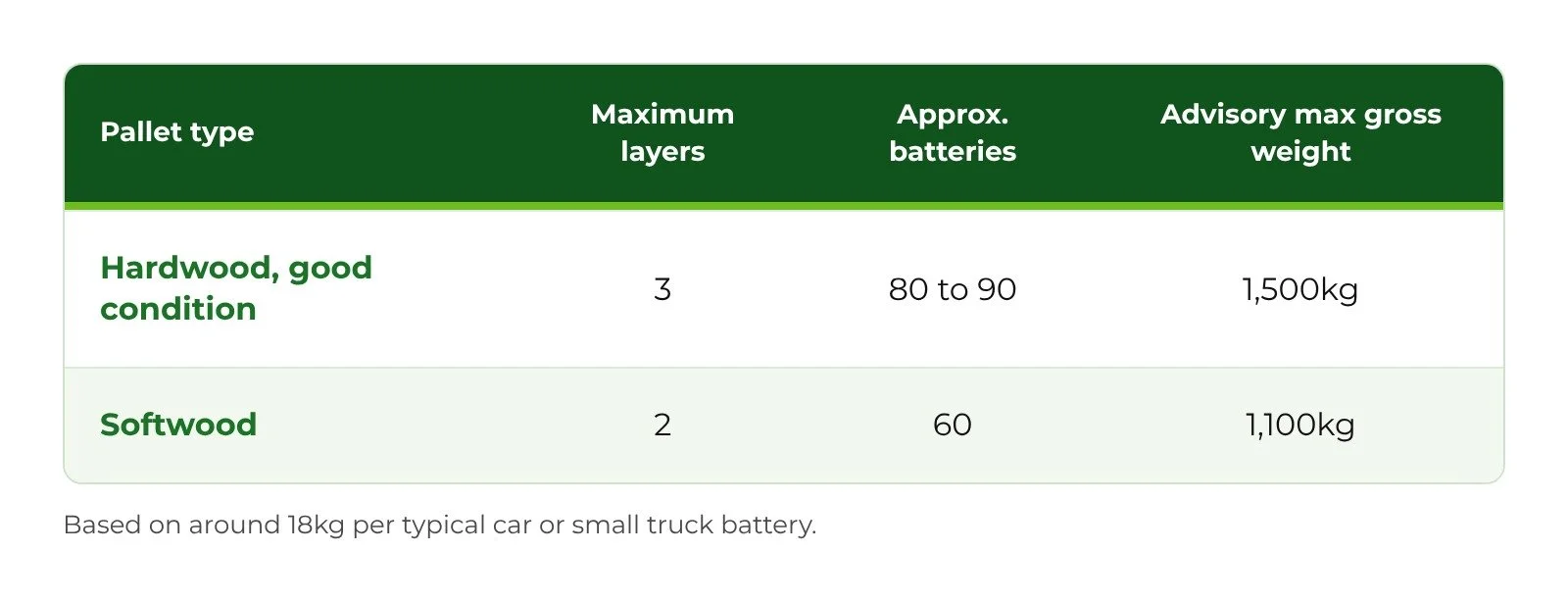
These figures assume around 18kg per typical car or small truck battery. Weigh pallets where you can, and always check what your recycler will accept. Some only take pallets stacked two layers high.
3 - Strap and wrap pallets securely
How a pallet is secured has a big impact on safety in transit.
Under the guideline:
Never use steel strapping as it can cause short circuits and fires
Use plastic strapping at least 19mm wide with a combined break strength of 1,500kg
Fit automotive batteries with one horizontal strap per layer, plus at least two cross straps to the pallet
Use clear stretch wrap so recyclers and emergency services can see what’s inside
Leave room in the wrap for gas to escape
4 - Prevent short circuits
The guideline calls short-circuit prevention one of the most important safety controls in ULAB logistics.
Never let terminals carry the weight of other batteries
Use separators between layers that are deeper than the terminals
Keep metal tools and debris clear
5 - Track the whole load for placarding
Many suppliers collect old batteries on the same route they use to deliver new ones. Some collectors stop at several sites before heading to a recycler.
The guideline makes it clear that placarding is based on the cumulative load on the vehicle. A truck can cross the placard threshold halfway through a run. Drivers need to recalculate as the load builds and be ready to placard on the road, not only at the last stop.
From the first pickup, keep new stock and ULAB clearly separated in the vehicle. New stock and ULAB must always stay clearly separated in the vehicle.

Know your role in the chain of responsibility
When ULAB travels in a vehicle over 4.5 tonnes, the Heavy Vehicle National Law (HVNL) applies. Its chain of responsibility makes every party in the transport chain accountable for safety, not only the driver. This matters even if your load starts small, because it may end up on a heavy vehicle further down the chain.
Business executives can also be held accountable if their decisions contribute to a breach, so that duty can't be contracted out.
The guideline maps the roles each part of the ULAB supply chain typically plays:
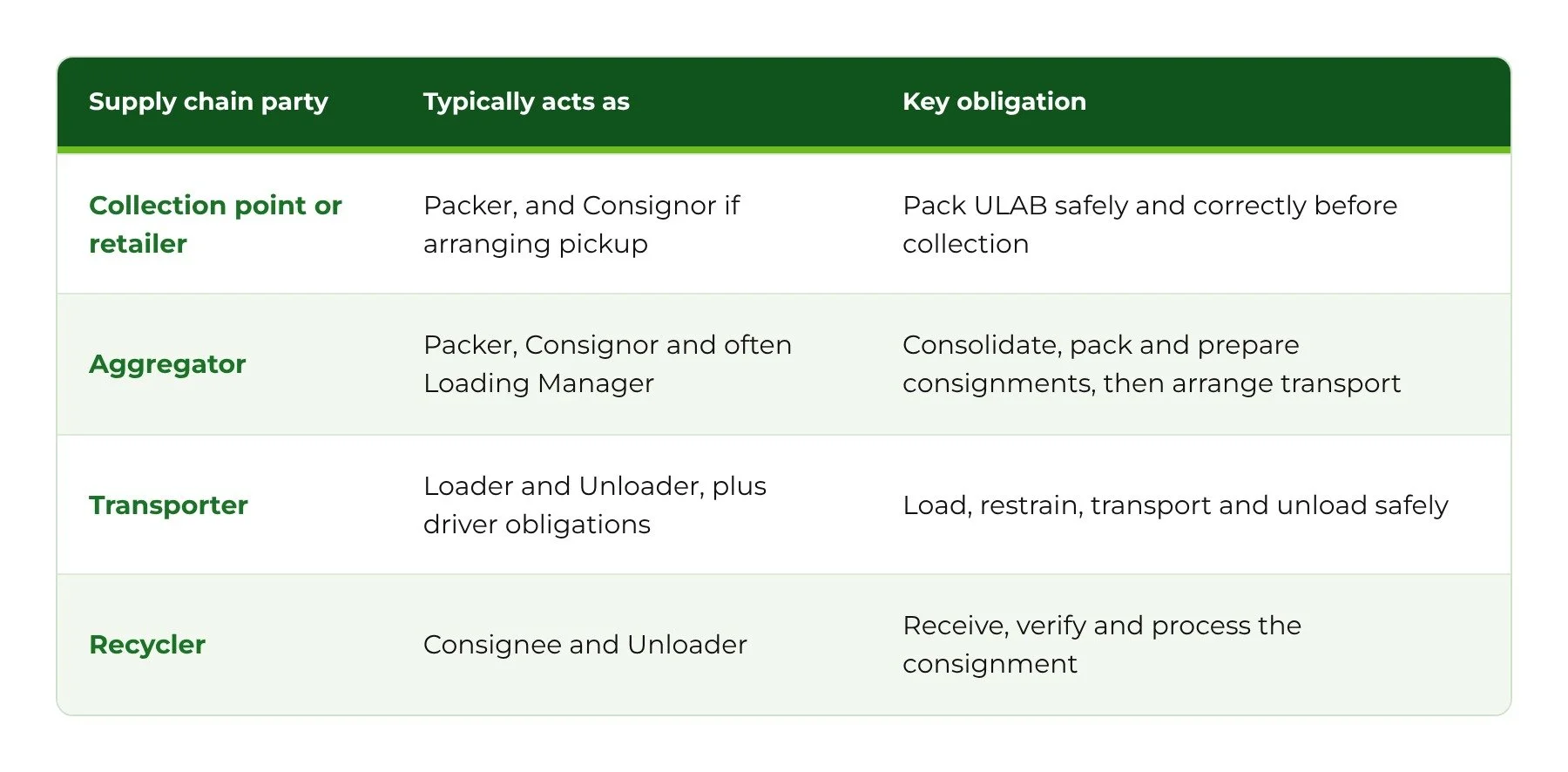
Your role depends on what your business does, not what it calls itself. One business can hold several roles at once.
The HVNL applies in every state and territory except Western Australia and the Northern Territory. Western Australia has broadly similar laws. Loads from the Northern Territory usually travel interstate for processing, so the guideline recommends managing risk as if the HVNL applied.
Where to start
If you’re reviewing how your business handles ULAB, these steps may be a useful starting point. They don’t replace the guideline or your legal obligations.
Read the guideline and share it with everyone who packs, loads or schedules ULAB.
Talk to your recycler and transporter. Ask about their packaging, stacking and approval requirements before your next consignment. They may have their own requirements on top of the regulatory rules to suit their sites.
Check for mixed chemistries. Look at how lithium and other batteries are sorted out before packing.
Look at your pallets. Compare pallet type, layers, weight, strapping and wrap with the guideline.
Review multi-stop runs. Consider whether drivers know how to track the cumulative load and when to placard.
Understand your role. Work out where your business sits in the chain of responsibility and what that may require of you.
Frequently asked questions
Are used lead acid batteries dangerous goods?
Yes. Lead acid batteries are Class 8 corrosive dangerous goods because of their acid electrolyte. They're also hazardous goods and controlled waste, classified nationally as D220 (D221 in Western Australia).
How many batteries can go on a pallet?
As a guide, a good hardwood pallet holds around 80 to 90 car batteries over three layers, up to about 1,500kg gross. A softwood pallet holds around 60 batteries over two layers, up to 1,100kg. Always check with your recycler.
When does a ULAB load need placards?
A vehicle needs Class 8 placards once it carries a placard load. For ULAB, that's around 4,000kg of batteries, based on a nominal 25% acid content. On multi-stop runs, count the cumulative load on board.
Does the guideline replace my legal obligations?
No. It's a practical guide to the key standards and codes. Regulations change, so always confirm current requirements with your state or territory regulator.
Can I use steel strapping on ULAB pallets?
No. Steel strapping can short-circuit battery terminals and cause a fire. Use high-strength plastic strapping instead.
Safe ULAB logistics depends on every business in the chain doing its part.
Download the ULAB Logistics Guideline
Handling lithium batteries too? Read ABRI's Used Lithium Batteries Guide