Traceability, safety and the battery circular economy
Australia has entered a new era of battery use
Adapted from an article published in Green Review - August 2026.
13 August 2026: From electric vehicles and heavy transport to battery energy storage systems, Australia is entering a new era of high-voltage lithium batteries.
These larger battery systems are essential to the clean energy transition, but they also present new challenges. Unlike many traditional batteries, they can pose significant fire and electric shock risks if incorrectly identified or handled without the right technical information.
As these batteries become more common, ensuring they can be safely identified, transported, repaired and recycled becomes increasingly important. At the same time, the number of battery chemistries, manufacturers and imported products entering the Australian market continues to grow.
The risks associated with managing these products are significant. When a lithium battery reuse and recycling facility in Perth caught fire, the immediate concern was for workers, emergency responders and nearby residents. The incident is still being investigated. However, the broader message is clear. Australia cannot keep treating batteries as anonymous products that become visible only when they fail, burn or arrive at a recycler's gate. Batteries are moving through collection, transport and processing systems without sufficient identification, information or accountability.
There is no consistent, nationally mandated system that enables battery information to follow a product from the time it enters Australia through its use, repair, reuse, transport and eventual recycling. The result is greater uncertainty for businesses responsible for collecting, transporting and recovering batteries, avoidable challenges for regulators and emergency responders. It is also more difficulty for manufacturers seeking to substantiate claims about recycled content, responsible sourcing and other sustainability credentials.
The Association for the Battery Recycling and Reuse Industry (ABRI) believes the next logical step is introducing mandatory battery traceability, beginning with larger lithium batteries, to ensure critical information follows them from the moment they enter the Australian market through to their eventual recovery.
Battery traceability is about more than knowing where a battery is
When people hear the term "track and trace", they often think of GPS tracking or scanning a barcode, but battery traceability is much broader than that.
It is the ability to identify a battery and maintain reliable information about it throughout its lifecycle.
That information may include:
the manufacturer
chemistry
voltage
performance characteristics or state of health, these are critical for safety
servicing history
eventual recovery or recycling.
Rather than existing in separate systems across manufacturers, importers, transport operators and recyclers, traceability creates a connected chain of information that follows the battery as it moves through the value chain.
Different users require access to different information. Consumers may only need basic product information, while recyclers, emergency services and regulators may require technical or compliance data to safely manage batteries throughout their lifecycle. This information can still be held in a way to protect intellectual property but support safety for those who most need it.
The objective is to ensure the right information is available to the right people when it matters.
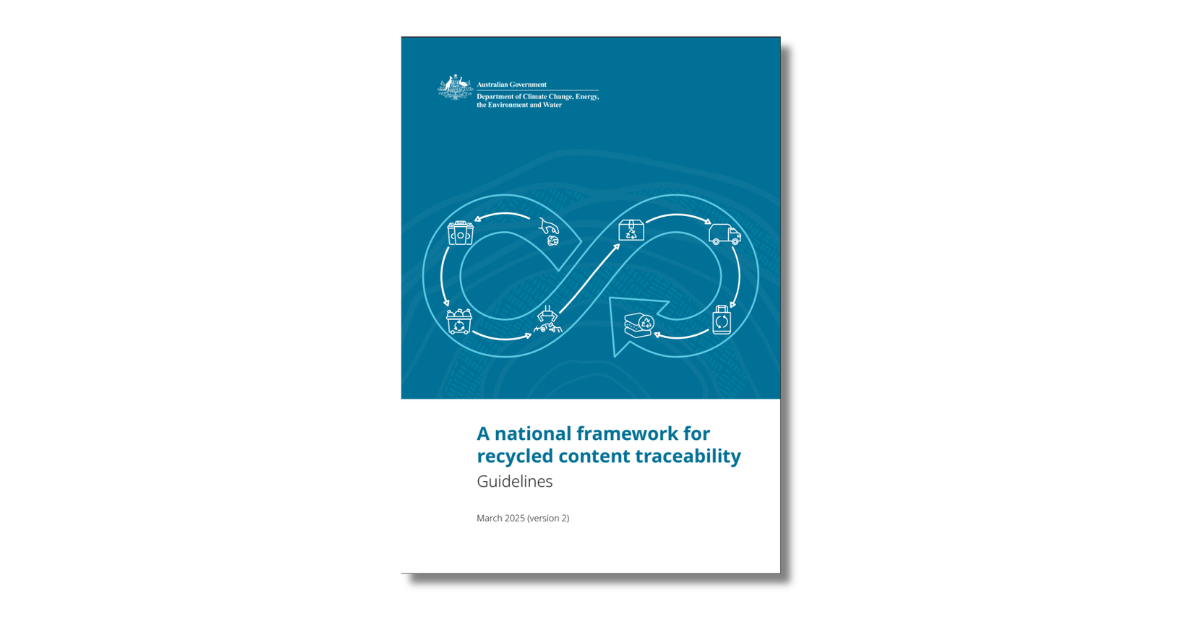
The Australian Government’s National Framework for Recycled Content Traceability
Better information leads to better safety
High-voltage lithium batteries used in electric vehicles, industrial equipment and battery energy storage systems cannot be treated like conventional consumer batteries. These batteries contain substantially more stored energy and may present both fire and electric shock risks if they are incorrectly identified, transported, dismantled or depowered.
Lithium batteries are not standardised. They have different designs, chemistry mixes, battery management systems and disassembly requirements. Different products require different handling procedures, transport requirements, storage conditions and recycling processes. As new battery technologies continue to enter the Australian market, understanding exactly what products are moving through the supply chain becomes increasingly important. This is especially true for larger battery formats, where safe identification, depowering and disassembly are essential to reducing the risk of fire and electrical injury while maximising material recovery.
Workers need reliable information about exactly what they are dealing with to support safer battery repair, transport, repurposing and recycling. Information such as battery chemistry, voltage and safe depowering procedures should be readily available rather than inferred after the battery reaches a facility.
Mandatory traceability for larger batteries would not prevent every incident, but it would give industry, regulators and emergency responders the information they need to manage risk more effectively. It would strengthen Australia's ability to reduce safety risks, respond more effectively when incidents occur and improve future product oversight.
Building a more efficient circular economy
Battery traceability is equally important at the end of a battery's first life because it helps maximise the value of the materials contained within each battery. Knowing a battery's chemistry, composition and condition allows batteries to be directed to the most appropriate recovery pathway, whether that is repair, refurbishment, second-life applications or material recovery.
Without reliable information, batteries may be directed to lower-value recovery pathways, valuable materials can be lost and opportunities to recover critical minerals may be missed. Traceability helps ensure battery materials remain in productive use for as long as possible, supporting both resource efficiency and Australia's circular economy.
Australia has identified critical minerals and battery materials as strategic industries. Recovering lithium, nickel, cobalt, copper and other battery materials from products already in circulation reduces reliance on virgin resources while strengthening domestic supply chains. Recovering battery materials can require up to 96 per cent less raw material than producing them from virgin sources¹, making effective recovery an important part of Australia's circular economy. Traceability provides the information needed to maximise that recovery.
Traceability underpins credible environmental claims
As governments, investors and customers increasingly scrutinise environmental claims, businesses must be able to do more than simply state the sustainability credentials of their products. They must demonstrate them.
The Australian Competition and Consumer Commission (ACCC) has made it clear that environmental claims should be accurate, truthful and supported by evidence. Broad statements such as "environmentally friendly" or "sustainable" are increasingly difficult to justify without clear supporting information. In a review of 247 Australian businesses², the ACCC identified concerns with environmental claims made by 57 per cent of those assessed, highlighting the growing regulatory focus on substantiating sustainability claims.
This is where traceability becomes essential.
If a manufacturer wishes to claim recycled content, responsibly sourced materials or participation in a circular economy, those claims should be supported by verifiable supply chain information rather than marketing language alone.
Australia's National Framework for Recycled Content Traceability recognises exactly this principle by providing guidance for tracing recycled materials through supply chains. Applying similar principles to batteries would strengthen confidence across the entire battery value chain and help businesses make credible environmental claims supported by evidence.
The rest of the world is already moving
Major international markets are already introducing systems that recognise battery information as an essential part of the product itself.
The European Union's Battery Regulation requires digital battery passports for specified battery categories from February 2027. These passports are designed to carry trusted lifecycle information, not simply identify a battery. For EV batteries, the regulation requires around 80 mandatory data attributes³, including information about the battery's manufacturer, chemistry, carbon footprint, recycled content, performance, durability, responsible sourcing and end-of-life management.
China has implemented battery traceability systems⁴ for new energy vehicle batteries as part of its broader producer responsibility framework, while South Korea has strengthened battery identification⁵ and disclosure requirements to improve transparency and battery safety. Although these approaches differ in scope and design, they reinforce that battery information is becoming part of the product itself.
That shift is not being driven by governments alone. The Global Battery Alliance's Battery Passport pilots involve organisations representing around 80 per cent of global battery production⁶, demonstrating that many of the world's largest battery manufacturers are already helping shape the traceability systems likely to underpin future supply chains.
For Australia, this has implications beyond domestic regulation. Australian manufacturers, importers, recyclers and material suppliers will increasingly operate in markets where verified battery information is expected. Reliable traceability will also help Australian recyclers demonstrate the provenance of recovered materials such as lead, lithium, nickel, copper and cobalt, supporting access to international markets where verified recycled content is increasingly valued.
Australia is therefore not deciding whether battery traceability will become part of the global market, but whether to prepare for that transition or respond after international systems have already been established.
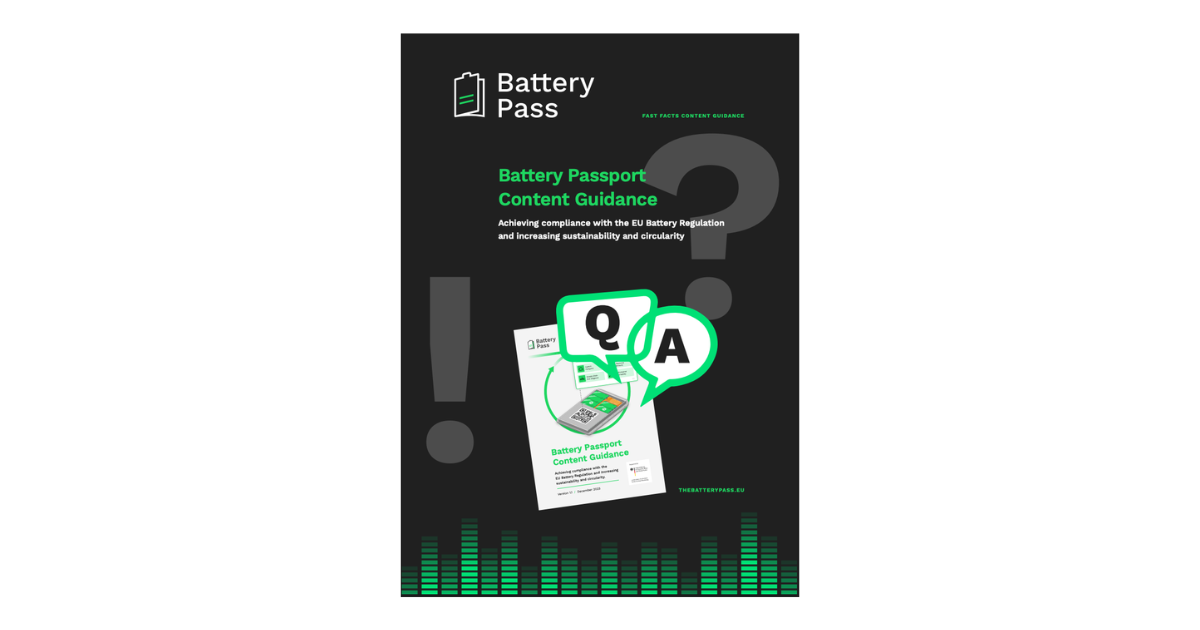
The European Union’s Battery Passport Guide
Australia's opportunity
The National Framework for Recycled Content Traceability already establishes many of the principles required to improve transparency, including consistent information collection, verification and chain-of-custody practices.
The next step is extending those principles into a mandatory battery-specific framework that draws on internation requirements and begins when batteries are first placed on the Australian market and continues through their entire lifecycle. There is no need for reinvention.
Rather than focusing only on end-of-life management, traceability should begin when batteries enter Australia, ensuring critical information is available from the outset to support safe use, repair, reuse and eventual recovery.
Such a system should:
assign a clear responsibility to manufacturers or importers placing batteries on the Australian market
establish nationally consistent minimum data requirements
allow information to be updated throughout a battery's lifecycle
provide appropriate access for regulators, emergency services, industry participants and consumers
align, where practical, with emerging international frameworks to reduce duplication for Australian businesses operating globally.
Most importantly, it should ensure that critical information exists before it is needed, rather than attempting to reconstruct it later.
Information is now part of the product
As Australia's battery industry continues to grow, governments are pursuing mandatory producer responsibility, greater resource recovery, improved safety outcomes and stronger domestic manufacturing capability. All objectives which depend on reliable information.
Battery traceability is the information infrastructure that will enable Australia's battery industry to grow safely, efficiently and transparently as it expands from a $2.1 billion industry today to a projected $6.9 billion by 2050¹.
Australia has already recognised the importance of traceability for recycled materials. As battery technologies continue to evolve and international expectations continue to rise, extending those principles through mandatory battery traceability represents the next logical step.
If Australia wants to build a safe, competitive and genuinely circular battery value chain, every battery placed on the Australian market should be accompanied by the information needed to manage it responsibly from manufacture through to material recovery.
References
¹ Association for the Battery Recycling and Reuse Industry. Battery Materials Recovery Industry Profile. Available at: https://static1.squarespace.com/static/6548618de92db95798675b91/t/69b2546ebcf74c5ca1845c70/1773294702516/ABRI+Battery+Materials+Recovery+Industry+Profile.pdf
² Australian Competition and Consumer Commission (ACCC). Greenwashing by Businesses in Australia: Findings of the ACCC's Internet Sweep of Environmental Claims. Available at: https://www.accc.gov.au/system/files/Greenwashing%20by%20businesses%20in%20Australia.pdf
³ Battery Pass Ready. Battery Passport Content Guidance: Achieving Compliance with the EU Battery Regulation and Increasing Sustainability and Circularity. Available at: https://thebatterypass.eu/wp-content/uploads/q-a_content-guidance.pdf
⁴ Battery Tech Online. China Launches Digital IDs for EV Battery Traceability. Available at: https://www.batterytechonline.com/ev-batteries/china-launches-digital-ids-for-ev-battery-traceability
⁵ Korea Times. Gov't Proposes Revision Disclosing EV Battery Manufacturer, Country of Origin. Available at: https://www.koreatimes.co.kr/business/20260322/govt-proposes-revision-disclosing-ev-battery-manufacturer-country-of-origin
⁶ Global Battery Alliance. 2026 Battery Passport Pilots. Available at: https://www.globalbattery.org/2026-battery-passport-pilots/?utm_source=chatgpt.com